
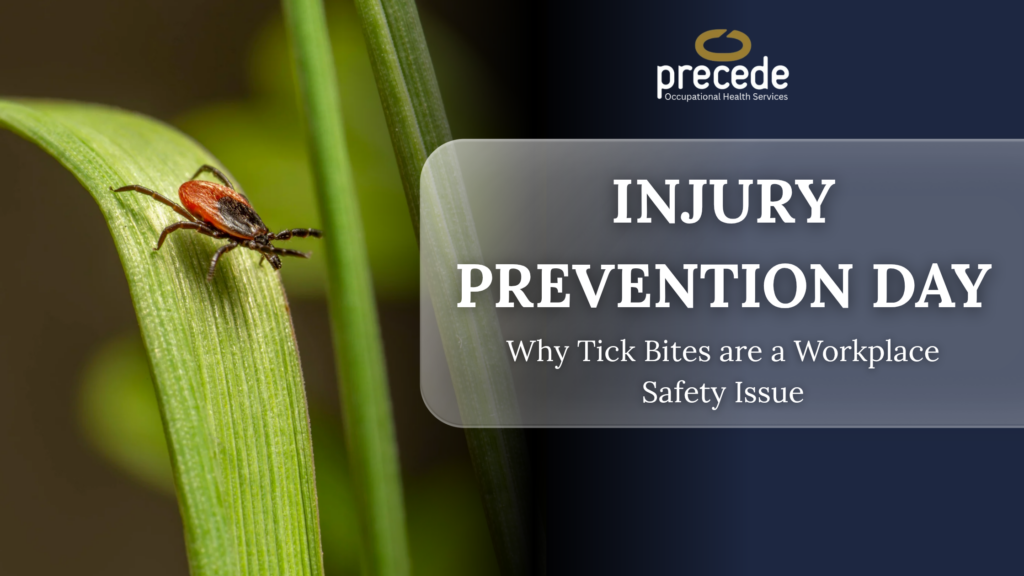
When people think about workplace injuries, they often picture slips, falls, strains, or equipment-related incidents. However, for employees working outdoors, tick bites are an often-overlooked occupational hazard that can have serious long-term health consequences.
Workers in construction, oil and gas, forestry, agriculture, environmental services, utilities, and other outdoor industries regularly spend time in grassy and brush-covered environments where ticks are commonly found. As tick populations continue to expand across Canada, employers should be including tick bite prevention as part of their workplace health and safety programs.
Why Tick Bites Matter?
While some tick bites cause only mild skin irritation, certain species – particularly the blacklegged tick (deer tick) – can carry bacteria and parasites capable of causing serious illnesses like Lyme disease.
If left untreated, Lyme disease can lead to:
- Fatigue
- Joint pain and inflammation
- Muscle aches
- Headaches
- Neurological complications
- Long-term disability
- Lost work time and reduced productivity
The most common tickborne illness in Canada is Lyme disease, caused by the bacteria Borrelia burgdorferi, which is notoriously hard to treat. The infected bite may be accompanied by a characteristic circular “bull’s-eye” rash, but it’s important to know that this does not appear in every case. Early symptoms of Lyme disease may mimic other illnesses, such as a fever.
Ticks in Canada may also transmit other illnesses, including Anaplasmosis and Babesiosis. These infections often begin with flu-like symptoms and may also include nausea, vomiting, diarrhea, or abdominal pain. Like Lyme disease, early diagnosis and treatment significantly improve outcomes.
One of the biggest challenges with tick-borne illnesses is that symptoms don’t always develop immediately. Bacterial infections from tick bites may take up to 4 weeks to appear. Workers feeling any symptoms of illness within one month of a tick bite should see their health care provider for urgent assessment. Early treatment is important to prevent long term complications and disability.
Tick Bite Prevention for Outdoor Workers
Employers and workers can reduce the risk by:
- Wearing light-coloured, long-sleeved clothing
- Tucking pants into socks or boots
- Applying an approved insect repellent (containing DEET or Icaridin)
- Staying on cleared paths whenever possible
- Performing a full-body tick check after outdoor work
- Showering soon after returning indoors
- Removing ticks promptly using fine-tipped tweezers
Employers should also educate their teams about tick awareness, provide appropriate personal protective equipment (PPE), and establish clear reporting and response procedures for tick exposures as part of their occupational health and safety program.
Final thoughts
Injury prevention goes beyond preventing accidents. Protecting workers from environmental hazards, including ticks and other insect-borne diseases, is an important part of creating a safer workplace.
By incorporating tick bite prevention into your workplace safety policies, training, and hazard assessments, employers can help reduce illness, minimize lost-time injuries, and keep workers healthy throughout the outdoor season.
If you have been bitten by a tick, or believe you may have been exposed, and begin feeling unwell days, weeks, or even months later, don’t ignore your symptoms. Seek medical attention as soon as possible and let your healthcare provider know about your potential tick exposure. Early diagnosis and treatment are the best ways to prevent serious long-term complications.
Need help developing a tick bite policy and procedure for your outdoor personnel? Contact Precede Occupational Health Services to learn how we can support your organization’s occupational health and safety program.
Explore Our Occupational Health Services
www.precedeohs.com | info@precedeohs.com | +1 866 989 0499
Sources:
Health Link BC, Tick bites and disease.
https://www.healthlinkbc.ca/healthlinkbc-files/tick-bites-and-disease
Government of Canada, Causes of West Nile Virus
Causes of West Nile virus – Canada.ca
World Health Organization, Public health advice on ticks and tick born diseases.