
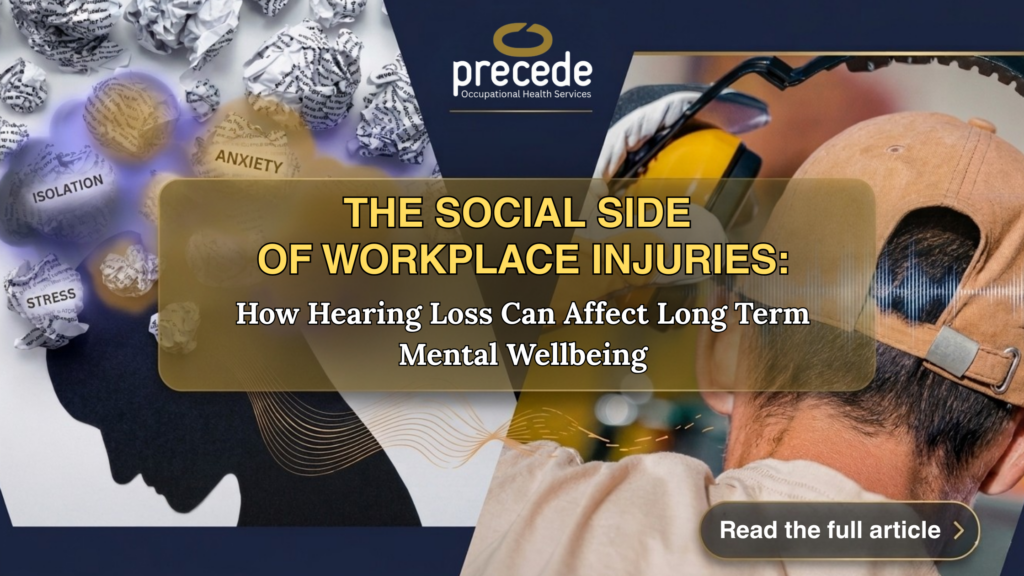
When people think about workplace injuries, they often picture something visible, like a broken bone or a physical strain. However, some of the most impactful workplace injuries are the ones that develop quietly over time.
It is well known that high levels of noise exposure can result in occupational hearing loss. But in high risk industries (construction, oil & gas, manufacturing, mining, etc), occupational hearing loss can also result from exposure to chemicals such as toluene, styrene, and carbon disulfide. In fact, occupational hearing loss is one of the most common long-term workplace health concerns. And while the physical effects of hearing damage are well known, the emotional and social impact is often overlooked.
More Than Just “Physical”
Hearing loss affects how people connect, communicate, and feel in their everyday lives. It plays a critical role in how we interact with the world around us. Conversations with coworkers, safety instructions on-site, family dinners at home, and social gatherings all depend on clear communication.
When hearing loss begins to interfere with those moments, people may start to feel frustrated, isolated, or even disconnected.
Many workers report:
- Difficulty following conversations when background noise is present
- Increased stress from constantly asking others to repeat themselves
- Fatigue from straining to hear
- Withdrawal from social situations due to embarrassment or frustration
- Reduced confidence at work and at home
Over time, these challenges can contribute to high amounts of stress, depression, and a decline in overall mental wellbeing.
The Link to Long-Term Mental Wellbeing
There is a strong connection between untreated hearing loss and mental health concerns.
For workers in high-risk industries, where teamwork and communication are essential, this can be especially difficult. Engaged employees become withdrawn. Confident employees become unsure. Natural leaders fade into isolation.
Hearing loss can also lead to increased safety risks, which may put even more pressure on the individual.
Early Detection Matters
The good news is that occupational hearing loss is preventable. Early identification of warning signs is an essential component of an effective hearing conservation program.
Routine Audiometric evaluations help to identify changes before they significantly affect quality of life. Early intervention can support:
- Better workplace safety
- Improved communication and job performance
- Reduced long-term mental health strain
- Faster access to treatment or protective solutions
- Stronger overall employee wellbeing
Pre-employment testing, annual monitoring, and proactive hearing conservation programs all play an important role in protecting workers long before hearing loss becomes severe.
Audiometric Testing
Hearing conservation programs shouldn’t exist just to meet compliance requirements, they should exist to protect people, both physically and emotionally.
Supporting employees means recognizing that invisible injuries can have lasting effects. Prevention, regular testing, and early intervention can help workers stay safe, healthy, and connected – both in the workplace, and at home.
Precede Occupational Health supports high risk industries across North America with pre-employment audiometric testing, annual examinations and hearing conservation program support. Our protocols adhere to local Occupational Health & Safety legislation, with standardized equipment, expert interpretation, approachable explanations, and ongoing education and support for your team.
Schedule a consultation with us today to explore how we can help support your workforce, Together, we can prevent physical – and emotional- workplace hearing injuries
www.precedeohs.com/audiometric-testing/ | Info@precedeohs.com | +1 866 989 0499
Follow Us: