
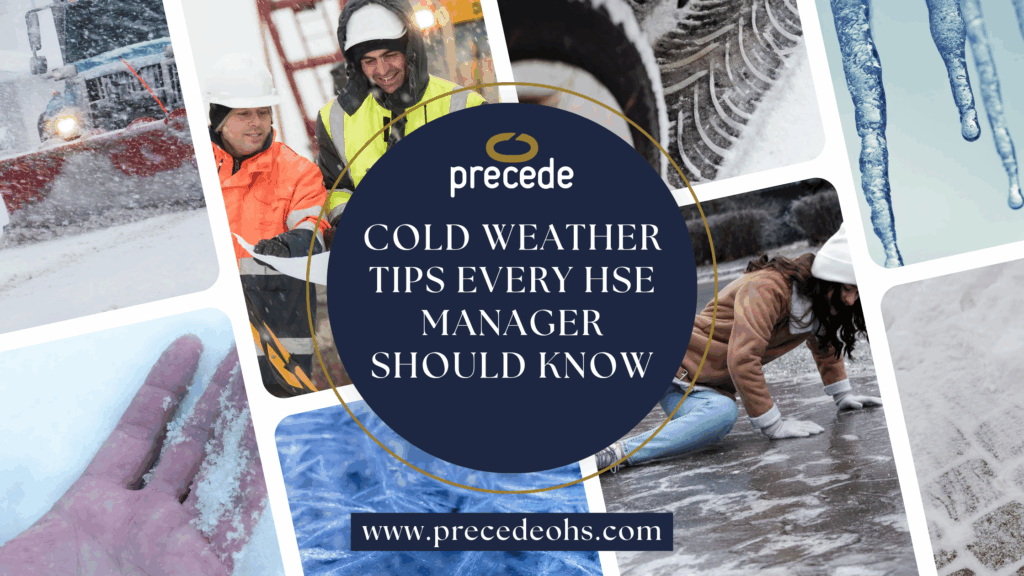
Whether we’re ready for it or not, winter is here! And as temperatures drop and icy conditions begin to set in, new risks and challenges begin to emerge for workplaces across North America, especially those with outdoor teams. From cold stress, which can lead to hypothermia and frostbite, to the increased risk of slips and falls, it’s crucial that safety officers and HSE managers are prepared to tackle the hazards this season brings.
At Precede Occupational Health, our priority is helping you keep your workforce safe and healthy. That’s why we’ve put together a list of practical tips to keep your team protected and reduce absenteeism this winter.
Tip #1: Layer Up with Proper PPE
Proper clothing is your first line of defense against cold weather, and layering is key:
- Base Layer: Choose a moisture repellent material (like synthetic fabrics or merino wool) to help keep sweat off your skin and prevent chills.
- Insulating Layer: Fleece or wool traps heat and keeps your body warm.
- Outer Layer: A waterproof, windproof jacket protects you from the snow, rain, and wind.
*Don’t forget the extremities: Be sure to protect your hands, feet, ears, and nose, as these are most vulnerable in cold weather. Thermal gloves, insulated boots, hats, and scarves are essential.
*Safety note: High-visibility outerwear is also important in low-light winter conditions.
Tip #2: Recognize Cold-Related Illnesses
Workers and supervisors should know the signs of cold-related health risks:
- Hypothermia: Shivering, confusion, slurred speech, fatigue, numbness, increased heart rate, clumsiness.
- Frostbite: Numbness, pale or grayish skin, tingling or stinging sensations.
*Prevention: Regular warm-up breaks, and monitoring yourself and co-workers can prevent these conditions from becoming serious.
*BONUS TIP: Did you know that dehydration can increase susceptibility to cold stress? Be sure to keep your team hydrated!
Tip #3: Safe Work Practices
Cold weather affects not only your body but also your work environment:
- Limit exposure time outdoors and rotate workers when possible.
- Keep walkways and work areas clear of ice and snow to prevent slips and falls.
- Ensure equipment is winter-ready, including machinery, vehicles, and heaters.
Tip #4: Emergency Preparedness
Be prepared in case of an emergency:
- Know the location of first aid kits and warming stations.
- Report cold-related symptoms immediately.
- Have an emergency plan for severe weather or extreme cold conditions.
Winter work can be tough, but with the right gear, preparation, and awareness, you can keep yourself and your team safe from the cold. Stay warm, stay alert, and make safety a priority all season long!
At Precede OHS, we are committed to supporting worker health and safety all year-round. Contact us today to learn how we can help you better protect your teams!
www.precedeohs.com | Info@precedeohs.com | +1 866 989 0499
Follow Us: