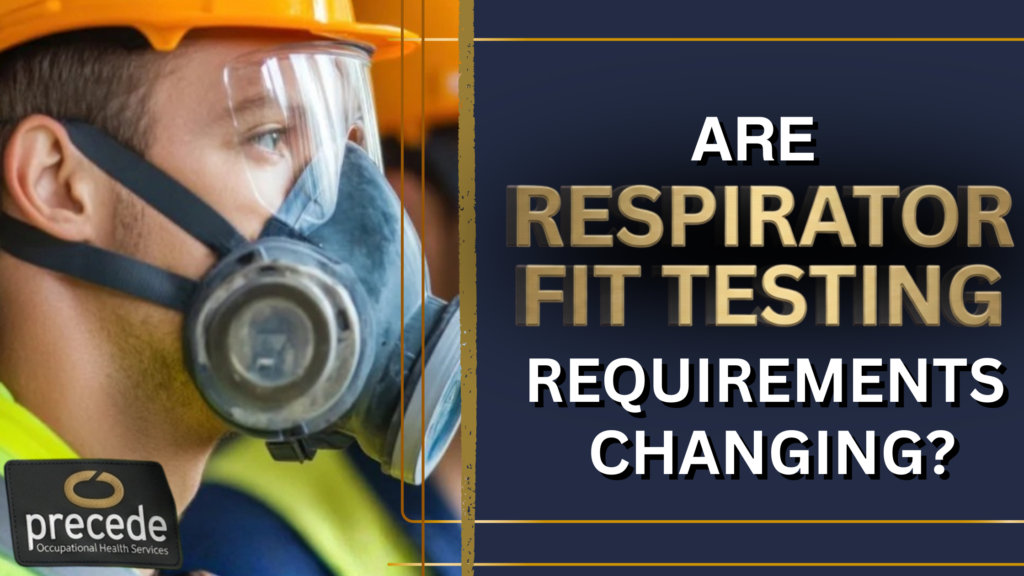
Lately, there has been growing discussion in Canadian occupational health and safety circles about potential updates to respirator fit testing requirements. So what’s actually changing, and what does this mean for employers?
Is There New Legislation?
While respirator fit testing standards are governed by provincial occupational health and safety codes, the Canadian Standards Association’s Standard Z94.4 is the backbone of nearly every regulation.
Recently, the CSA closed the consultation period for Z94.4-25, meaning new standards are on the way. Staying up to date on anticipated changes is worth employers’ attention.
What Updates Have Been Proposed?
The draft update aims to modernize how respirators are used in Canadian workplaces. The most notable shifts include:
- Explicitly including healthcare workplaces in the respirator standard
- Reinforcing that fit testing, training, and documentation are core program requirements
- Clarifying the appropriate use of respirators for airborne biohazard protection, where surgical masks are not considered respiratory protection
- Normalizing respirator use across the broad range of industries where airborne hazards exist
The new standard focuses on expanded employer responsibilities for worker health, with rigorous respiratory protection program review.
Which Industries Should Pay Attention?
If adopted into regulation, the impact could be significant for:
- Healthcare
- Construction
- Industrial & Manufacturing
- Laboratories
- Oil & Gas
- Emergency Response
- Automotive and Maintenance Facilities
In reality, any workplace where dust, fumes, chemicals, or airborne infectious particles are present should continuously monitor these updates.
What Could This Mean for Employers?
Regulation changes take time. However, the discussion around respirator fit testing standards signals that industries are moving toward stronger, more structured respiratory protection expectations. Employers who already have solid hazard assessments, fit testing, training, and documentation in place will be in the strongest position if updates are adopted.
Respirator compliance isn’t new, but enforcement is beginning to evolve. If your workplace wants to ensure that your current respiratory protection program aligns with anticipated requirements, Precede Occupational Health can help. Our team offers mask fit testing and compliance support across the country.
Connect with our team to book a free consultation:
www.precedeohs.com | info@precedeohs.com | +1 866 989 0499
Sources:
- Standards Council of Canada. CSA Group – Selection, Use, and Care of Respirators (Z94.4)https://scc-ccn.ca/standards/notices-of-intent/csa-group/selection-use-and-care-respirators-2
- WorkSafeBC. Occupational Health and Safety Guidelines – Personal Protective Clothing and Equipment.https://www.worksafebc.com/en/law-policy/occupational-health-safety/searchable-ohs-regulation/ohs-guidelines/guidelines-part-08